The cleat determines where on your foot you stand on the pedal. That in turn determines the pressure on the ball of the foot, the load on the calves and often the movement of the knee. For most riders it is enough to set a few things according to simple rules and then fine-tune in small steps.
The advice is general and does not replace an examination by a podiatrist or a professional bike fitting.
- Starting position: the pedal axle slightly behind the ball-of-the-foot joint (table below).
- With problems (knee pain, burning feet) move the cleats back toward the heel in small steps.
- After moving the cleat, check the saddle height again.
- Change only one thing at a time and try 2 to 3 rides.
1. Starting position
The basic reference point is the big-toe joint: the bump on the inside of the foot where the big toe begins. Find it with your fingers, mark it with tape on the side of the shoe (ideally with a helper) and transfer the mark to the sole so it can be compared with the pedal axle.
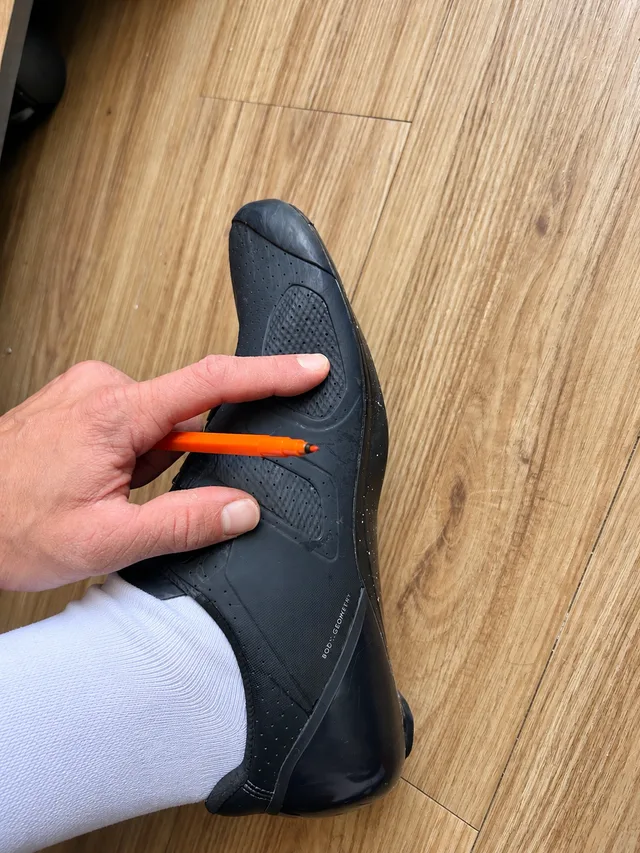
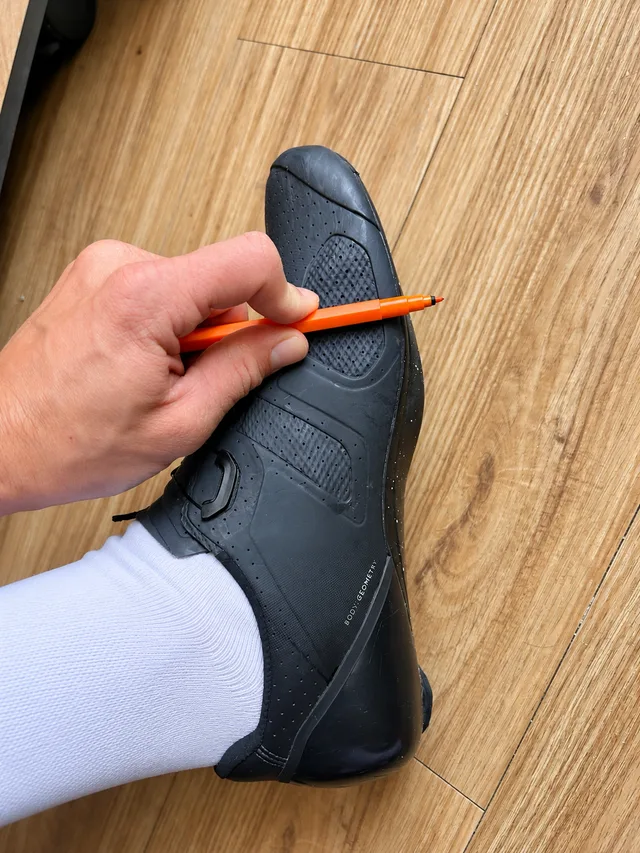
The classic rule says the pedal axle lies exactly under the big-toe joint. Fitters, however, more often recommend the axle slightly behind it, that is closer to the heel:
| Shoe size (EU) | Pedal axle behind the big-toe joint |
|---|---|
| 36–38 | about 7–9 mm |
| 39–41 | about 8–10 mm |
| 42–43 | about 9–11 mm |
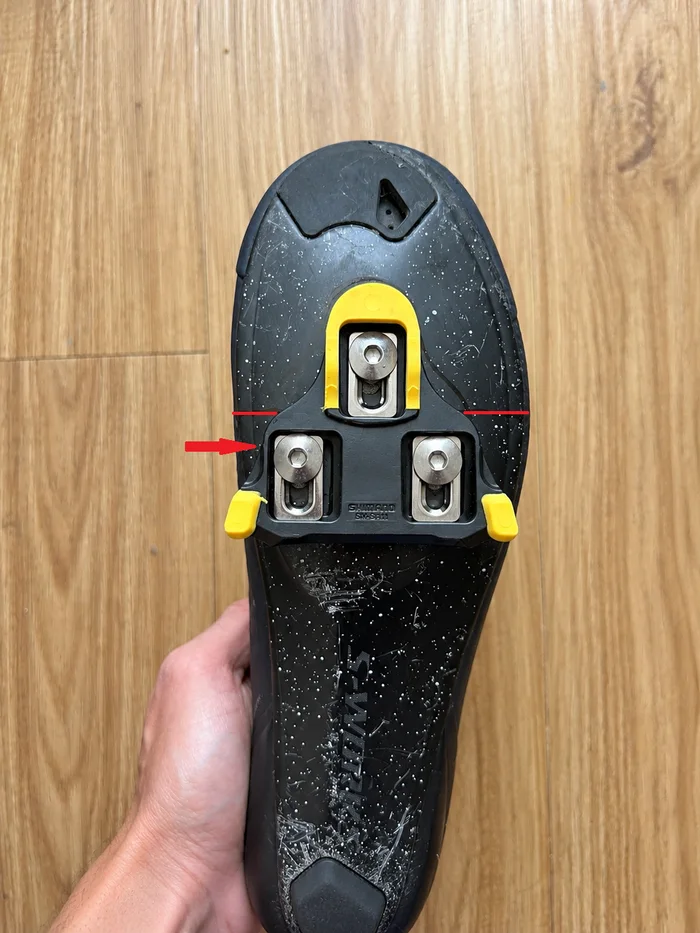
The values are a practical starting point according to fitter Steve Hogg, not the result of a study.
Another way to determine the cleat position: feel for the big-toe joint and the little-toe joint. The midpoint between them is, according to fitters (Tomáš Cepek, Colby Pearce), the safest place for the pedal axle. If you are not sure, rather move the cleat toward the heel; moving it toward the toes can worsen knee pain.
Left and right foot: set them the same unless there is a marked difference, for example in leg length. Treat different settings only after consulting a podiatrist.
2. What fitter James Thomas says
In a video on setting up cleats, fitter James Thomas (the Bikefit James channel) says the following. It is his experience, not a study.
- A cleat too far forward loads the sensitive ball of the foot, where there are many vessels and nerves. The foot becomes unstable, the toes curl and the problems travel up to the knee, hip and pelvis. He links this with pain at the front of the knee.
- As a rough rule he recommends putting the cleat as far back on the shoe as possible.
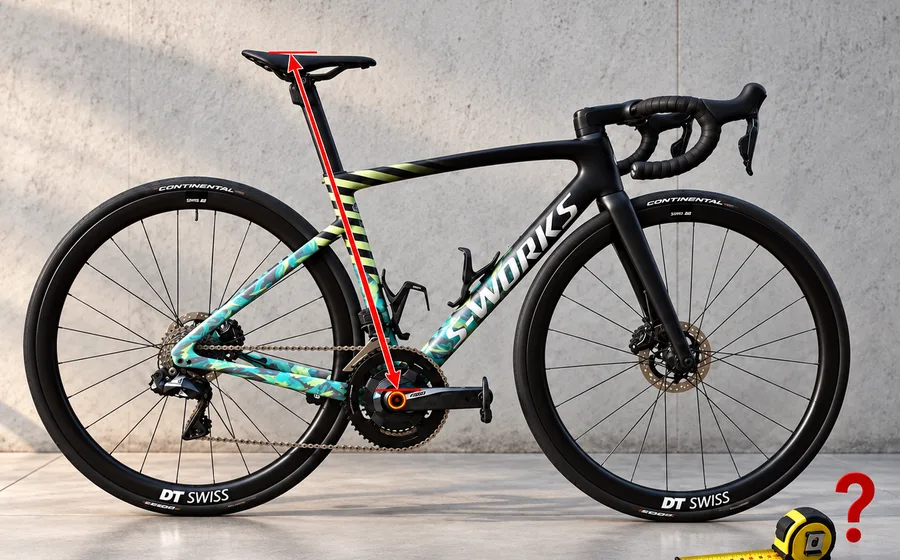
- Moving it back, in his view, raises the effective saddle height by roughly 15 mm. With problems, therefore, also try lowering the saddle.
- A shorter foot lever loads the Achilles tendon and calf less. Moving forward for the “leverage effect” is, in his view, not worth it.
- Most riders need rather a wider stance (the cleat moved so that you stand more on the big-toe joint and the foot is further from the crank). A narrower stance is rare.
- Leave at least a little float. A cleat with no float often just masks another cause, for example a wrong shoe, missing arch support or a cleat too far forward.
3. What fitter Neill Stanbury says
In a video on cleat float, Neill Stanbury (Road Cycling Academy) says the following. It is his experience, not a study.
- A cleat with more float is almost always the safer choice. It gives the rider more room to absorb a setup error or fatigue.
- A fixed cleat holds the foot at one angle. If the hip rotates with fatigue or asymmetry, the force is transferred higher up to the knee, hip or back. The “wobbling” of the foot on the pedal is therefore not solved by it.
- Pedals with more float (for example Speedplay) do not cure knee pain by themselves. They just let the foot rotate a little, so the force is not passed on to the knee.
- Cleat rotation follows how you walk: if you walk with your feet turned out, you ride with external rotation. Do not force the foot “straight”; rotate the cleat so that the foot sits at its natural angle in the middle of the float range.
- A fixed cleat may suit sprinters and riders in short races who feel secure in it. It is not suitable for long rides and adds nothing to power. He used it as a last attempt in a fitting for only a fraction of people.
I have been setting cleats this way for the last two years. Mostly according to the starting rules, but when a rider feels pain above the knee, I move them on the shoe plate as far back as possible (toward the heel). The same setting also works when the rider's feet burn. The reactions are mostly positive.
The type of cleat matters too: some do not allow such a shift, in which case the furthest possible setting according to the rule applies.
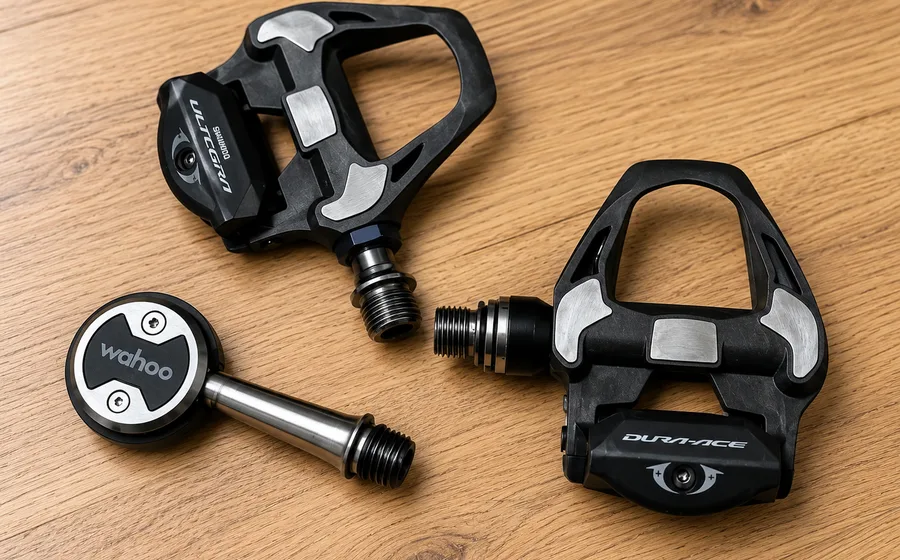
I walk with my feet in a V. Shimano cleats did not allow the float I need, so I use Wahoo Speedplay: I set the float as needed in the range 0° to 15° (manufacturer's figure) and I have longer pedal axles. For V-footed walkers I personally recommend longer pedal axles (see the article on extended axles).
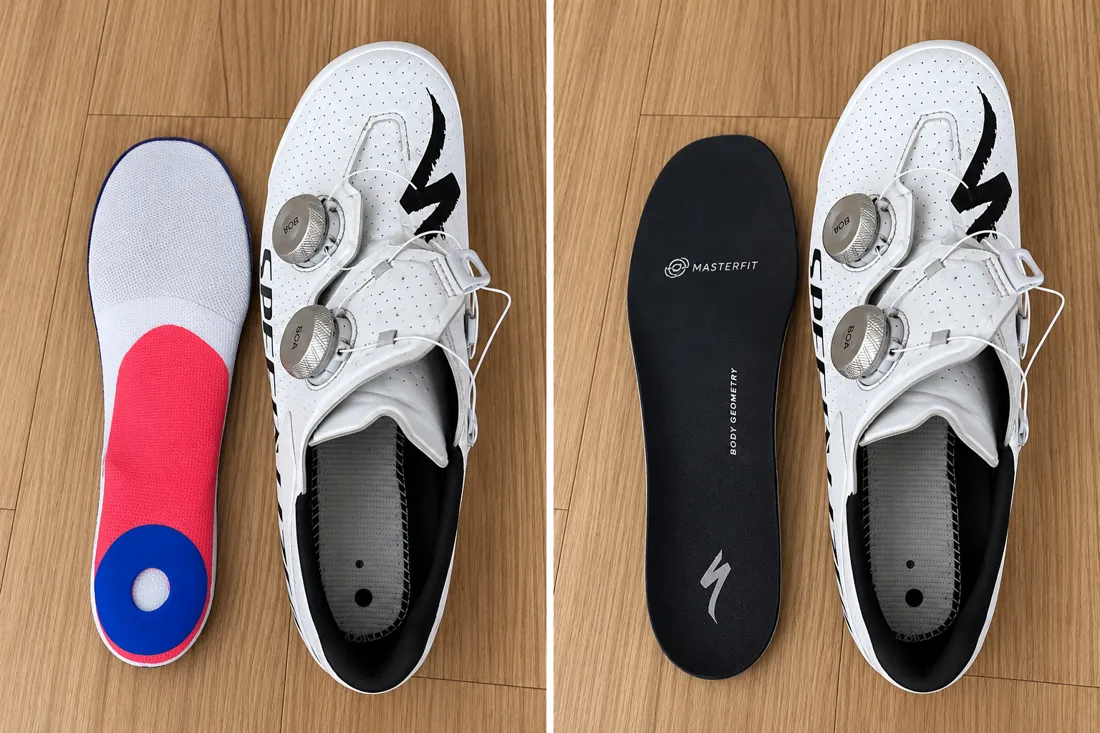
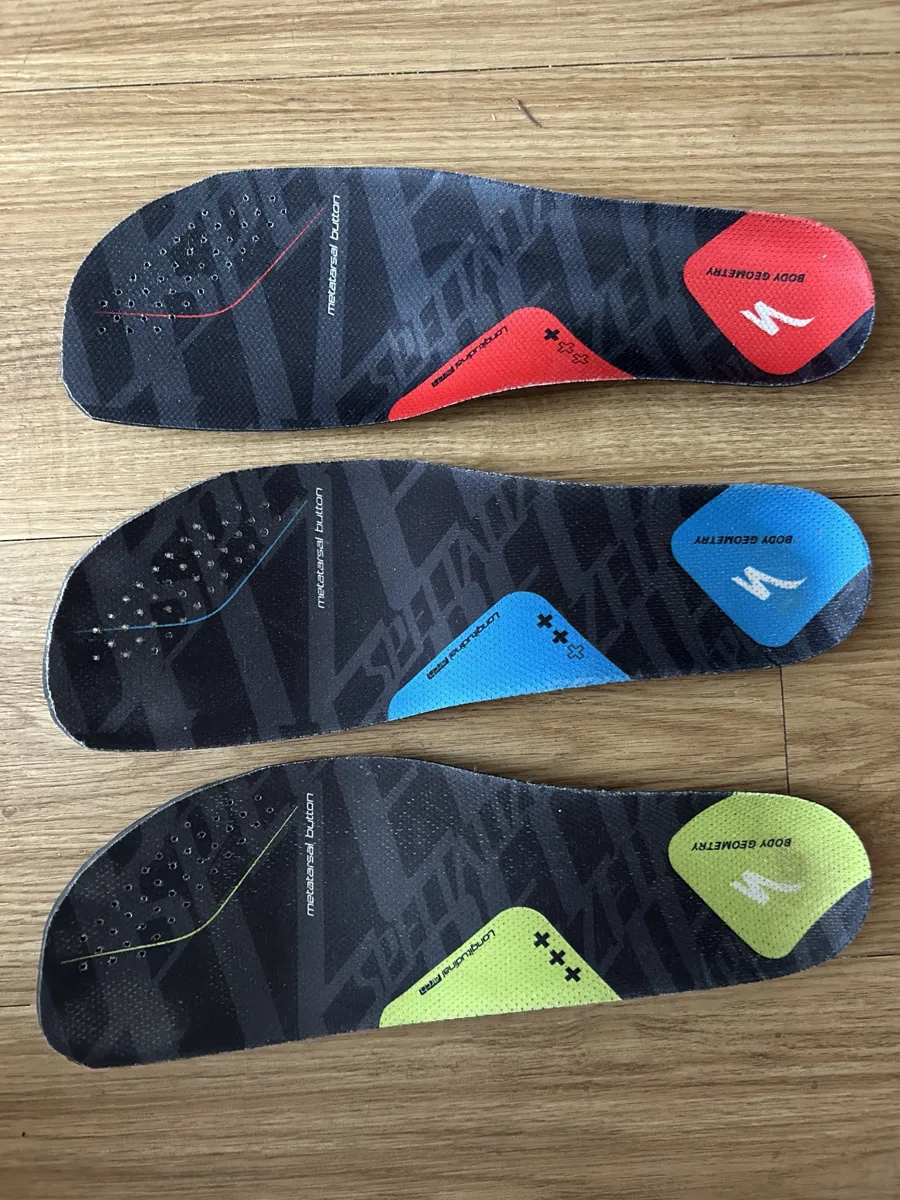
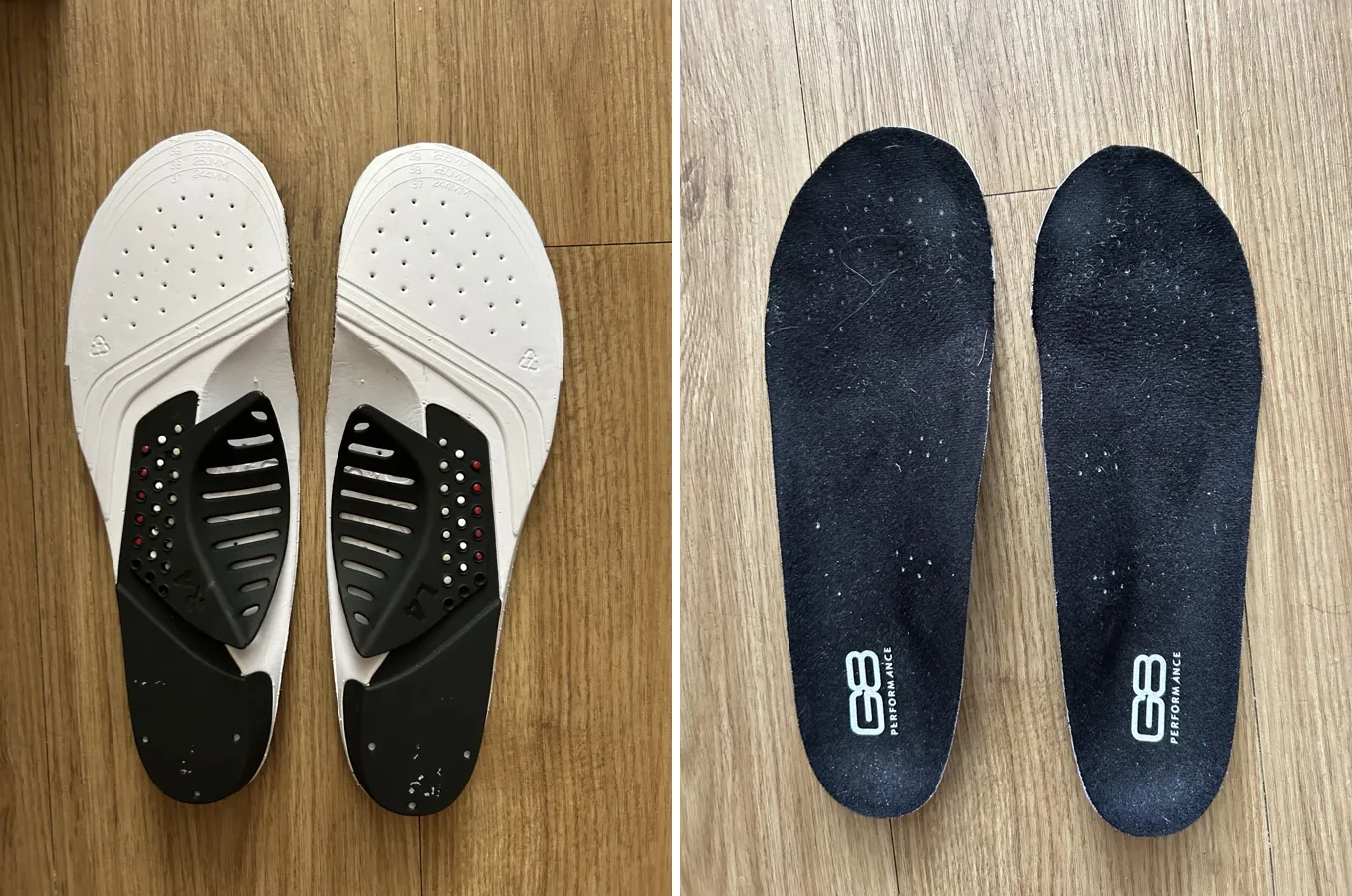
I also recommend custom insoles: in my experience they give the foot support while pedalling.
This is my practice, not the result of a study.
4. What studies say
A small study of 12 competitive cyclists (Chartogne et al., 2023) showed that moving the cleat 15 mm forward or backward did not change power, muscle activity or perceived exertion. It did, however, change the angles at the hip, knee and ankle, which were smaller when moving forward. The study did not measure the relation to knee pain. Comfort and foot stability should therefore decide, not the effort to find a single correct value.
5. Procedure in small steps
- Photograph the sole with the cleat so you can return to the original position.
- Move the cleat 2 to 3 mm back and change only this one thing.
- Try 2 to 3 similar rides and then evaluate.
- Continue by another 2 to 3 mm if it helps and the slot in the sole allows it.
- After the change check the saddle height (see the Saddle height card). If pain at the back of the knee appears, move the cleat 1 to 2 mm forward and check the saddle.
- Tighten the bolts according to the manufacturer's instructions and after the first ride check that nothing has moved.
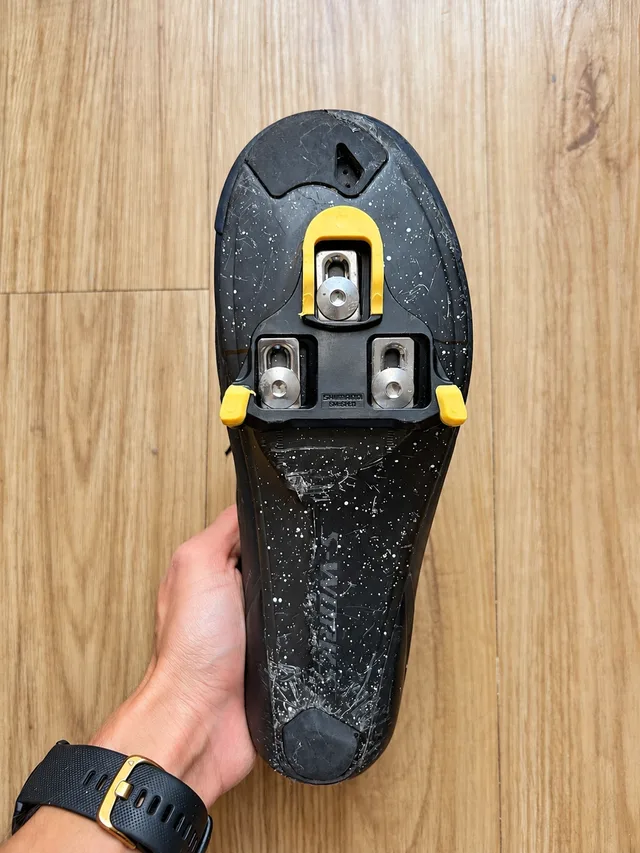
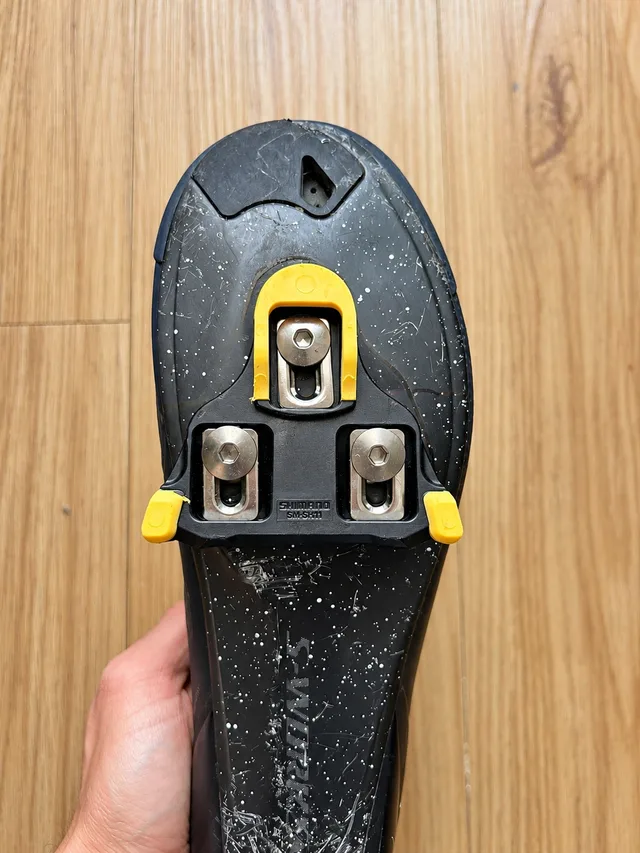
A position even further than the rear end of the slot (adapters, special shoes) is only for the experienced and belongs with a fitter.
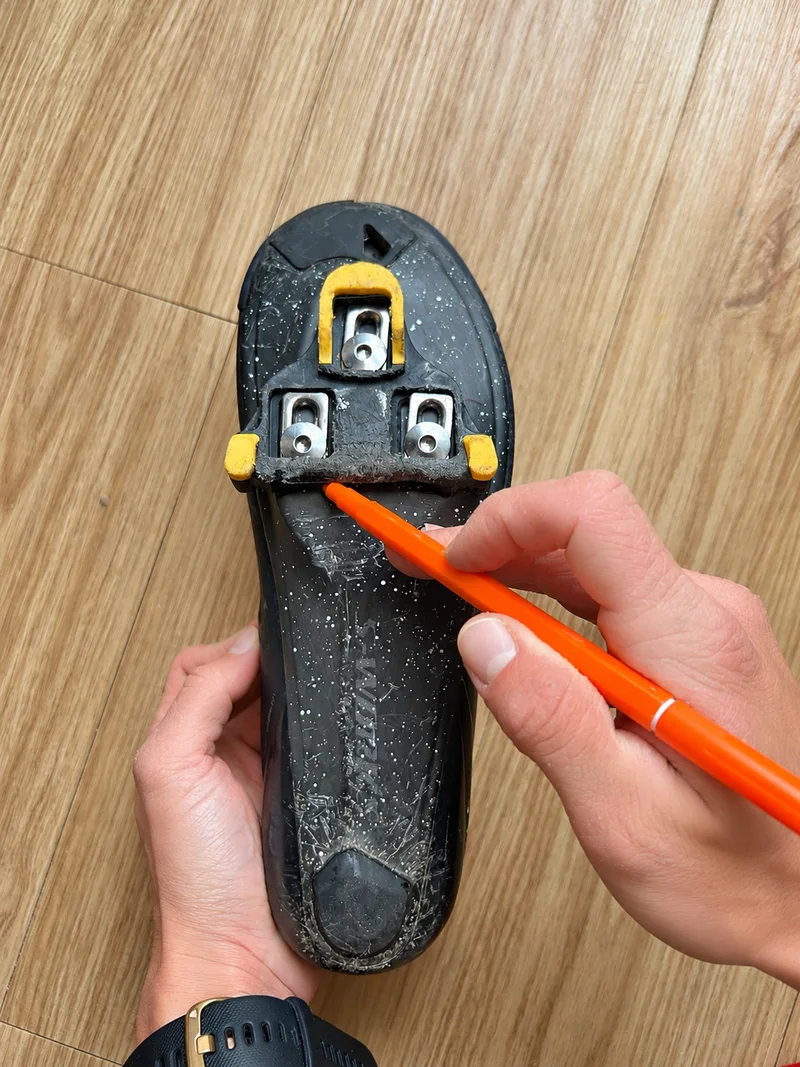
Before you take the old cleat off, trace around it on the sole with a marker. You then line the new cleat up with the outline and have the same starting position, from which you can move in small steps. You still need to check the position, but you do not have to rely on guessing.
6. Rotation and float
Set the cleat rotation according to the natural position of the foot: the cleat should respect it. Walking is a good guide: if you walk with your feet in a V, you usually ride turned out too. The natural angle of the foot should lie in the middle of the float range, so the heel can swing a little to both sides. Float lets the foot rotate slightly before the cleat releases. If you are not sure, leave a little float and watch the knee.
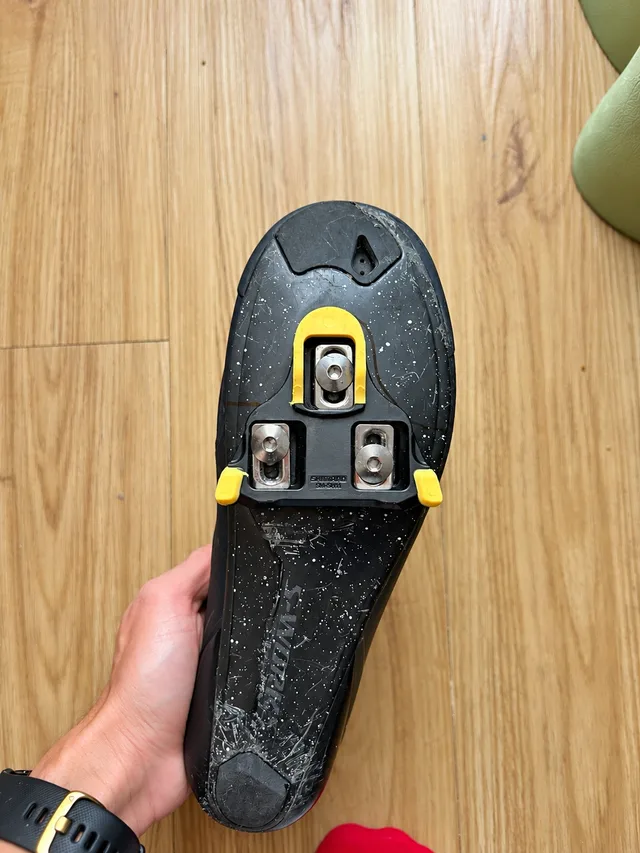
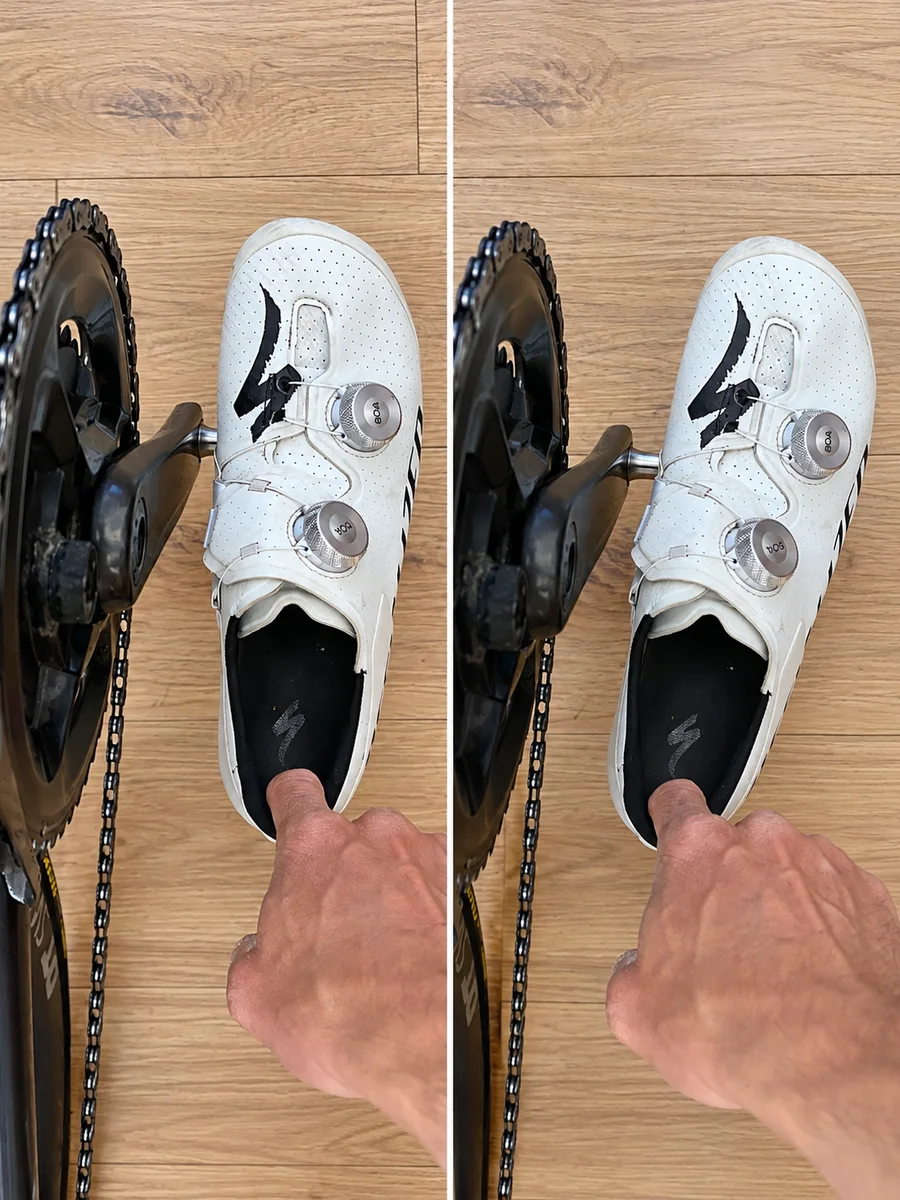
The road cleats of the two most common systems each come in three variants, distinguished by colour (figures from manufacturers and retailers, verify for the specific model):
| System | Colour | Float |
|---|---|---|
| Shimano SPD-SL | red (SM-SH10) | 0°, no float |
| Shimano SPD-SL | yellow (SM-SH11) | 6° |
| Shimano SPD-SL | blue (SM-SH12) | 2° |
| Look Keo | black | 0°, no float |
| Look Keo | grey | 4.5° |
| Look Keo | red | 9° |
| Wahoo Speedplay Zero | adjustable | 0° to 15° |
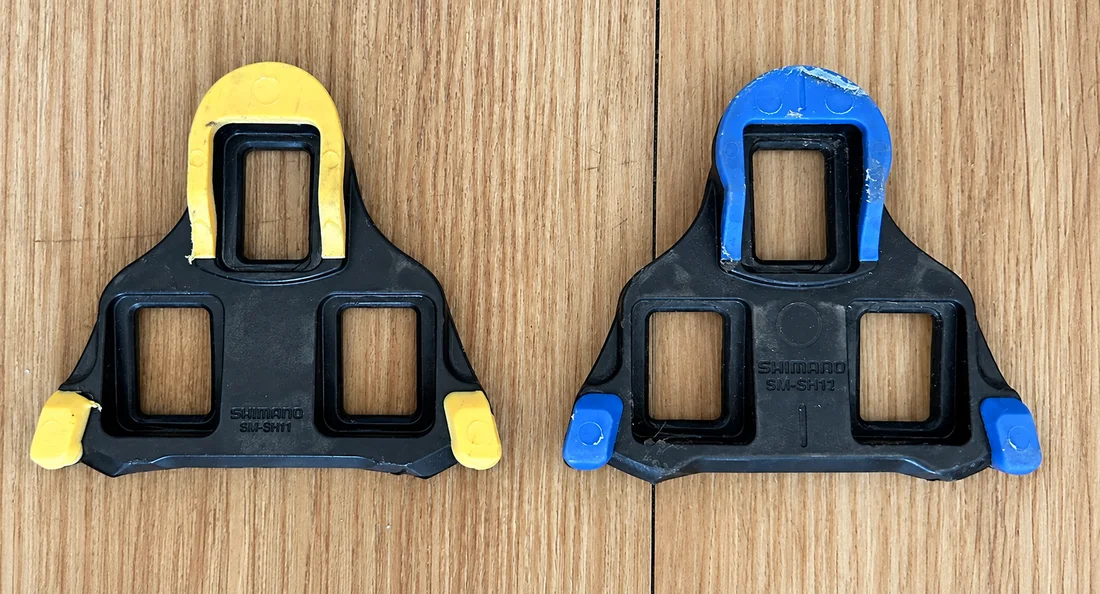
Note that colours do not match between systems: red is without float at Shimano, but with the most float at Look. Fitters in videos quote different figures for Shimano (4.5° and 2.5°), so rely on the manufacturer's data and the marking on the cleat. With a foot alignment issue (varus or valgus foot), wedges and insoles are also used.
7. What to try according to symptoms
| Symptom | What to try |
|---|---|
| Burning, tingling or pressure under the toes | Move the cleats 2–3 mm back, check the shoe width, insoles and tightening. For long-lasting problems, a podiatrist. |
| Pain at the front of the knee | Move the cleats back by a small step, check the saddle height (a saddle that is too low). |
| Pain above the knee | Cleats as far back as the shoe plate allows (my experience). |
| Pain at the back of the knee | Do not move the cleats back, check the saddle height (too high). |
| Pain on the inside or outside of the knee | Check rotation, float and stance width. If it persists, a fitter or doctor. |
| Overloaded calves or Achilles tendon | Move the cleats back by a small step. |
| The foot “floats” on the pedal | Check whether the cleat is loose or worn. |
The table contains general practical advice, not a diagnosis.
8. Common mistakes
- Changing several things at once.
- Setting the cleats too far forward because “it has always been done that way”.
- Riding on worn cleats.
- Not knowing the original position.
- Overlooking the footwear: a wrong shoe size or shape cannot be fixed by cleats.
9. When to see a professional
If the problems do not go away after several small adjustments, or there is persistent pain, numbness, tingling, swelling or knee pain, contact a bike fitter, podiatrist or doctor. Never push through pain.
How ComfiVelo can help
With a photo or video you can check how your position looks after adjusting the cleats and how the knee, ankle or hip angles have changed. The app does not measure the cleat position itself, so always verify it directly on the shoe.
The text is educational and does not replace a professional examination.
Details and sources
- Chartogne M. et al. (2023): Acute effects of small changes in antero-posterior shoe cleat position on physiological and biomechanical variables in road cycling. Sports Biomechanics 22(4):510–521.
- Hogg S.: Footloose, stevehoggbikefitting.com. Fitters' recommendations by shoe size, not a study.
- James Thomas (Bikefit James): Setting up your cycling cleats, Cycling shoe guide, Part 3, YouTube, 2024. A fitter's experience, not a study.
- Neill Stanbury (Road Cycling Academy): What Cleat Float is Best for Your Cycling?, YouTube. A fitter's experience, not a study.
- Wahoo: Speedplay Zero, manufacturer's figure for float 0° to 15°.
- Tomáš Cepek (MTBiker): Cepka: Takto môže mať aj hobík posed ako Pogačar!, interview, YouTube (hosted by Šimon Žďarský). A fitter's experience, not a study. (In Slovak.)
- Shimano SPD-SL and Look Keo Grip: retailer data (Excel Sports, Shimano SPD-SL, Excel Sports, Look Keo Grip), verify with the manufacturers before publication.